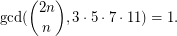
Conjecture For every rational and every rational , there is no polynomial-time algorithm for the following problem.
Given is a 3SAT (3CNF) formula on variables, for some , and clauses drawn uniformly at random from the set of formulas on variables. Return with probability at least 0.5 (over the instances) that is typical without returning typical for any instance with at least simultaneously satisfiable clauses.
Conjecture Can all problems that can be computed by a probabilistic Turing machine (with error probability < 1/3) in polynomial time be solved by a deterministic Turing machine in polynomial time? That is, does P = BPP?
Conjecture Suppose that is a -edge-critical graph. Suppose that for each edge of , there is a list of colors. Then is -edge-colorable unless all lists are equal to each other.
Conjecture Let is a family of multifuncoids such that each is of the form where is an index set for every and is a set for every . Let every for some multifuncoid of the form regarding the filtrator . Let is a graph-composition of (regarding some partition and external set ). Then there exist a multifuncoid of the form such that regarding the filtrator .
Conjecture A Fermat prime is a Fermat number that is prime. The only known Fermat primes are F_0 =3,F_1=5,F_2=17,F_3 =257 ,F_4=65537 It is unknown if other fermat primes exist.
For a finite (additive) abelian group , the Davenport constant of , denoted , is the smallest integer so that every sequence of elements of with length has a nontrivial subsequence which sums to zero.
Conjecture Let be a simple -uniform hypergraph, and assume that every set of points is contained in at most edges. Then there exists an -edge-coloring so that any two edges which share vertices have distinct colors.
Problem What is the maximum number of colours needed to colour countries such that no two countries sharing a common border have the same colour in the case where each country consists of one region on earth and one region on the moon ?
Question What is the least integer such that every set of at least points in the plane contains collinear points or a subset of points in general position (no three collinear)?
Conjecture Let be the complete funcoid corresponding to the usual topology on extended real line . Let be the order on this set. Then is a complete funcoid.
Proposition It is easy to prove that is the infinitely small right neighborhood filter of point .
If proved true, the conjecture then can be generalized to a wider class of posets.
Conjecture Let be a graph and be a positive integer. The power of , denoted by , is defined on the vertex set , by connecting any two distinct vertices and with distance at most . In other words, . Also subdivision of , denoted by , is constructed by replacing each edge of with a path of length . Note that for , we have . Now we can define the fractional power of a graph as follows: Let be a graph and . The graph is defined by the power of the subdivision of . In other words . Conjecture. Let be a connected graph with and be a positive integer greater than 1. Then for any positive integer , we have . In [1], it was shown that this conjecture is true in some special cases.
Conjecture Let be a graph and let such that for any pair there are edge-disjoint paths from to in . Then contains edge-disjoint trees, each of which contains .
Problem Determine a computable set of invariants that allow one to determine, given a compact boundaryless 3-manifold, whether or not it embeds smoothly in the 4-sphere. This should include a constructive procedure to find an embedding if the manifold is embeddable.
Suppose is a finite group, and is a positive integer dividing . Suppose that has exactly solutions to . Does it follow that these solutions form a subgroup of ?

 login/create account
 and every rational
  , there is no polynomial-time algorithm for the following problem.
 on
on  variables, for some
  clauses drawn uniformly at random from the set of formulas on
  simultaneously satisfiable clauses.
  (probably
  suffices) so that every embedded (loopless) graph with edge-width
  has a 5-local-tension.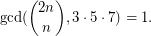
 is a
is a  of
of  of
of  -edge-colorable unless all lists are equal to each other.
  is a family of multifuncoids such that each
  is of the form
  where
where  is an index set for every
  and
and  is a set for every
  . Let every
  for some multifuncoid
  of the form
  regarding the filtrator
  . Let
. Let  is a graph-composition of
  ). Then there exist a multifuncoid
  of the form
  such that
  regarding the filtrator
  .
.  is a graph,
  is admissable, and
  is even for every
  , then
  has a faithful cover.
  be positive semidefinite, by Jensen's inequality, it is easy to see
 ![$ [tr(A^s+B^s)]^{\frac{1}{s}}\leq [tr(A^r+B^r)]^{\frac{1}{r}} $](/files/tex/f5fa90ccf8c1dde9b9bf1f21399b3b5428dab81d.png) , whenever
, whenever  .
. , is it still valid?
 is for every sets
  and
and  be a digraph. If
  , then
  .
. ![\[ F_n = 2^{2^n } + 1 \]](/files/tex/0da5a50010e4e5df91c0d58080245ece34ec9ca6.png) that is prime. The only known Fermat primes are F_0 =3,F_1=5,F_2=17,F_3 =257 ,F_4=65537 It is unknown if other fermat primes exist.
that is prime. The only known Fermat primes are F_0 =3,F_1=5,F_2=17,F_3 =257 ,F_4=65537 It is unknown if other fermat primes exist.
 , is the smallest integer
  so that every sequence of elements of
  has a nontrivial subsequence which sums to zero.
 , there is an integer
  so that every strongly
  -
- points is contained in at most
  edges. Then there exists an
  -edge-coloring so that any two edges which share
  such that every set of at least
  has a complete graph on
  vertices as a minor.
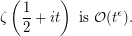
 can be replaced by a smaller value, we can also write the conjecture as, for any positive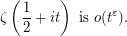
 be the complete funcoid corresponding to the usual topology on extended real line
 ![$ [-\infty,+\infty] = \mathbb{R}\cup\{-\infty,+\infty\} $](/files/tex/3252019c60a83f00ff396d823dbff8040639f409.png) . Let
. Let  be the order on this set. Then
  is a complete funcoid.
  is the infinitely small right neighborhood filter of point
 ![$ x\in[-\infty,+\infty] $](/files/tex/4e57a21194d8d5a659e259a111ed13a9c23b52a1.png) .
.  power of
  , is defined on the vertex set
  , by connecting any two distinct vertices
  and
and  with distance at most
  . Also
  , is constructed by replacing each edge
  of
of  , we have
  .
. . The graph
  is defined by the
  power of the
  subdivision of
  .
. and
and  be a positive integer greater than 1. Then for any positive integer
  , we have
  .
. such that for any pair
  there are
  edge-disjoint paths from
  to
to  in
in  .
.  be a matroid of rank
  let
let  be the number of closed sets of rank
  is unimodal.
  . Does the fragment
  have the finite model property?
  . Suppose that
  . Does it follow that these solutions form a subgroup of
  .
.  ?
?  which is slice, is it a ribbon knot?
 arc-disjoint transitive subtournaments of order 3.
  Drupal
 CSI of Charles University