Conjecture Define a array of positive integers where the first row consists of some distinct positive integers arranged in increasing order, and the second row consists of any positive integers in any order. Create a new array where the first row consists of all the integers that occur in the first array, arranged in increasing order, and the second row consists of their multiplicities. Repeat the process. For example, starting with the array , the sequence is: -> -> -> -> -> -> -> -> -> -> -> , and we now have a fixed point (loop of one array).
The process always results in a loop of 1, 2, or 3 arrays.
Conjecture If is a bridgelesscubic graph, then there exist 6 perfect matchings of with the property that every edge of is contained in exactly two of .
Given integers , the 2-stage Shuffle-Exchange graph/network, denoted , is the simple -regular bipartite graph with the ordered pair of linearly labeled parts and , where , such that vertices and are adjacent if and only if (see Fig.1).
Given integers , the -stage Shuffle-Exchange graph/network, denoted , is the proper (i.e., respecting all the orders) concatenation of identical copies of (see Fig.1).
Let be the smallest integer such that the graph is rearrangeable.
Conjecture Let be a circuit in a bridgeless cubic graph . Then there is a five cycle double cover of such that is a subgraph of one of these five cycles.
Conjecture A Fermat prime is a Fermat number that is prime. The only known Fermat primes are F_0 =3,F_1=5,F_2=17,F_3 =257 ,F_4=65537 It is unknown if other fermat primes exist.
Basic Question: Given any positive integer n, can any convex polygon be partitioned into n convex pieces so that all pieces have the same area and same perimeter?
Definitions: Define a Fair Partition of a polygon as a partition of it into a finite number of pieces so that every piece has both the same area and the same perimeter. Further, if all the resulting pieces are convex, call it a Convex Fair Partition.
Questions: 1. (Rephrasing the above 'basic' question) Given any positive integer n, can any convex polygon be convex fair partitioned into n pieces?
2. If the answer to the above is "Not always'', how does one decide the possibility of such a partition for a given convex polygon and a given n? And if fair convex partition is allowed by a specific convex polygon for a give n, how does one find the optimal convex fair partition that minimizes the total length of the cut segments?
3. Finally, what could one say about higher dimensional analogs of this question?
Conjecture: The authors tend to believe that the answer to the above 'basic' question is "yes". In other words they guess: Every convex polygon allows a convex fair partition into n pieces for any n
Conjecture Is the approximation ratio for the Maximum Edge Disjoint Paths (MaxEDP) or the Maximum Integer Multiflow problem (MaxIMF) bounded by a constant in -outerplanar graphs or tree-width graphs?
Question I've been working on this for a long time and I'm getting nowhere. Could you help me or at least tell me where to look for help. Suppose D is an m-by-m diagonal matrix with integer elements all . Suppose X is an m-by-n integer matrix . Consider the partitioned matrix M = [D X]. Obviously M has full row rank so it has a right inverse of rational numbers. The question is, under what conditions does it have an integer right inverse? My guess, which I can't prove, is that the integers in each row need to be relatively prime.
Question What is the least integer such that every set of at least points in the plane contains collinear points or a subset of points in general position (no three collinear)?
Conjecture Given any complex numbers which are linearly independent over the rational numbers , then the extension field has transcendence degree of at least over .
A friendly partition of a graph is a partition of the vertices into two sets so that every vertex has at least as many neighbours in its own class as in the other.
Problem Is it true that for every , all but finitely many -regular graphs have friendly partitions?
Problem Let and be two -uniform hypergraph on the same vertex set . Does there always exist a partition of into classes such that for both , at least hyperedges of meet each of the classes ?
Conjecture For , let be the statement that given any exact -coloring of the edges of a complete countably infinite graph (that is, a coloring with colors all of which must be used at least once), there exists an exactly -colored countably infinite complete subgraph. Then is true if and only if , , or .

 login/create account
 array of positive integers where the first row consists of some distinct positive integers arranged in increasing order, and the second row consists of any positive integers in any order. Create a new array where the first row consists of all the integers that occur in the first array, arranged in increasing order, and the second row consists of their multiplicities. Repeat the process. For example, starting with the array
 ![$ [1; 1] $](/files/tex/73f8649de444361674c157a2fe98e0c5783f1c46.png) , the sequence is:
, the sequence is: ![$ [1; 2] $](/files/tex/83c3d9d7589f716ed6b0f05d26d36dabe8ba47aa.png) ->
-> ![$ [1, 2; 1, 1] $](/files/tex/a6a696aec4e84df6bc046cf6d30a4df80e156a14.png) ->
-> ![$ [1, 2; 3, 1] $](/files/tex/98b2f3e4134422c8a286f0326fc2f57ca9be2ab7.png) ->
-> ![$ [1, 2, 3; 2, 1, 1] $](/files/tex/19a9d24510f4551fa45b950aed32efed0636b355.png) ->
-> ![$ [1, 2, 3; 3, 2, 1] $](/files/tex/b00d573110ba8c2472820409103dd4cbd7bff7cc.png) ->
-> ![$ [1, 2, 3; 2, 2, 2] $](/files/tex/2aae90b65ae3f116402a1c0143127f80d86acdf0.png) ->
-> ![$ [1, 2, 3; 1, 4, 1] $](/files/tex/d614399c4078a70fbffb24eb99816a0974423175.png) ->
-> ![$ [1, 2, 3, 4; 3, 1, 1, 1] $](/files/tex/bf4dd82eaf95bd71a88cb78d3367efa2c7e4c942.png) ->
-> ![$ [1, 2, 3, 4; 4, 1, 2, 1] $](/files/tex/a4ef5900a9dde9b32311afe7dee2b143f42c405f.png) ->
-> ![$ [1, 2, 3, 4; 3, 2, 1, 2] $](/files/tex/ff367376ed7bb74fc6207273d7157062b83a1be6.png) ->
-> ![$ [1, 2, 3, 4; 2, 3, 2, 1] $](/files/tex/81ba2b3608ddba2fc95d32b74b70279f3f5adc5b.png) , and we now have a fixed point (loop of one array).
, and we now have a fixed point (loop of one array).
 is a
is a  of
of  , the 2-stage Shuffle-Exchange graph/network, denoted
  , is the simple
  -regular bipartite graph with the ordered pair
  of linearly labeled parts
  and
and  , where
  , such that vertices
  and
and  are adjacent if and only if
  (see Fig.1).
 , the
, the  -stage Shuffle-Exchange graph/network, denoted
  , is the proper (i.e., respecting all the orders) concatenation of
  identical copies of
  be the smallest integer
  such that the graph
  .
.  Square free?
  be a circuit in a bridgeless cubic graph
  , there exist positive integers
  ,
,  ,
,  such that
  .
. -minor.
  is a prime iff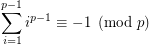
![\[ F_n = 2^{2^n } + 1 \]](/files/tex/0da5a50010e4e5df91c0d58080245ece34ec9ca6.png) that is prime. The only known Fermat primes are F_0 =3,F_1=5,F_2=17,F_3 =257 ,F_4=65537 It is unknown if other fermat primes exist.
that is prime. The only known Fermat primes are F_0 =3,F_1=5,F_2=17,F_3 =257 ,F_4=65537 It is unknown if other fermat primes exist.

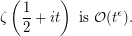
 can be replaced by a smaller value, we can also write the conjecture as, for any positive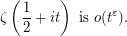
 is no more than the maximal size of an induced
  is unfriendly if every vertex has at least as many neighbors in the other classes as in its own.
  . Suppose X is an m-by-n integer matrix
  . Consider the partitioned matrix M = [D X]. Obviously M has full row rank so it has a right inverse of rational numbers. The question is, under what conditions does it have an integer right inverse? My guess, which I can't prove, is that the integers in each row need to be relatively prime.
 such that every set of at least
  collinear points or a subset of
  which are linearly independent over the rational numbers
  , then the extension field
  has transcendence degree of at least
 ![\[ M_n = 2^p - 1 \]](/files/tex/eb18a56e5c2e8b1be6ac733d217c0c1f1a47a94e.png) that is prime.
that is prime.
 and
and  be two
  . Does there always exist a partition of
  such that for both
  , at least
  hyperedges of
  meet each of the classes
  -uniform hypergraph on
  vertices which contains no complete
  hyperedges.
  vertices which contains no complete
  hyperedges.
  and
and  are
are  , then
  -manifold has the homotopy type of the
  , is it diffeomorphic to
  there is an integer
  such that every set of at least
  collinear points or an empty hexagon.
  , let
, let  be the statement that given any exact
  -coloring of the edges of a complete countably infinite graph (that is, a coloring with
  -colored countably infinite complete subgraph. Then
  ,
,  , or
, or  .
.  Drupal
 CSI of Charles University